


Tracking outbound B2B lead generation metrics requires looking past vanity indicators to isolate structural pipeline velocity. Healthy phone-based campaigns achieve a 4%–8% connect rate on scrubbed contact data and convert 5%–12% of connected dials into Marketing Qualified Leads (MQLs).
In This Article
Evaluating an outbound lead generation asset or internal BDR team requires isolating operational indicators at each stage of the funnel. When sales leaders evaluate b2b lead generation services, they must distinguish between top-of-funnel operational velocity and bottom-of-funnel conversion economics.
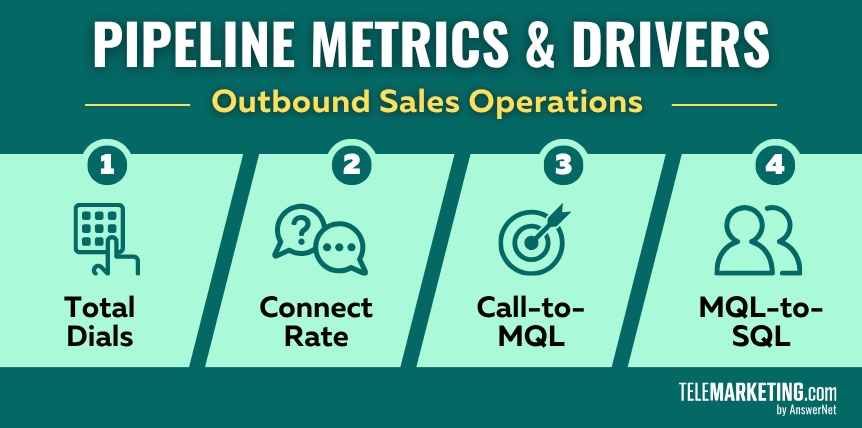
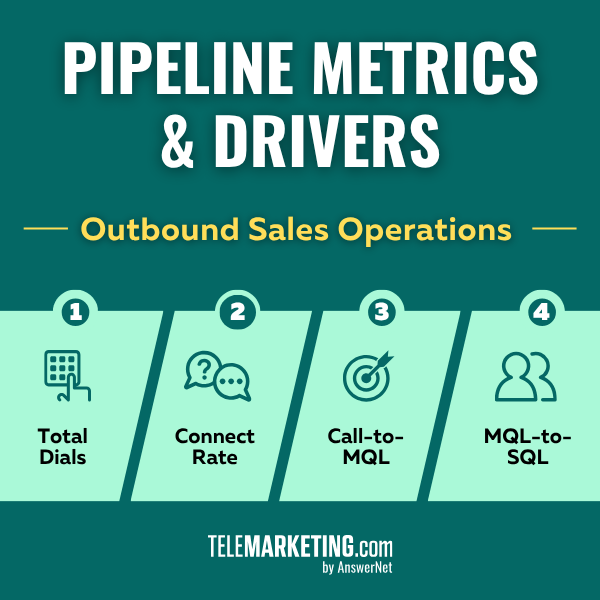
Core operational metrics: tracking the calling pipeline
Tracking phone-based B2B lead generation requires measuring connect rate, call-to-MQL conversion rate, and Lead Depletion Percentage. These metrics expose caller efficiency, list decay, and data quality before revenue outcomes materialize.
Campaign managers monitor specific operational variables across every 100 dials to evaluate caller performance:
- Connect Rate: The percentage of total dials that result in a live conversation with a human being (target: 4%–8% on direct-dial lists).
- Call-to-MQL Conversion Rate: The proportion of completed conversations that yield a prospect meeting baseline firmographic and interest criteria (target: 5%–12%).
- MQL-to-SQL Conversion Rate: The percentage of qualified leads accepted by account executives for scheduled discovery calls (target: 35%–50%).
- Lead Depletion Percentage: The proportion of a database that has reached a definitive final disposition: such as qualified, disqualified, bad number, or explicit opt-out: over a defined execution window.
Lead Depletion Percentage = (Completed Dispositions / Total Database Records) × 100
Systematic tracking of speed to lead metrics ensures inbound inquiries receive immediate telephone contact, preventing prospect decay.
Conversion rate benchmarks across key B2B verticals
Typical B2B outbound connect rates range between 3% and 8%, while call-to-MQL conversion rates average 5% to 12% across mature programs. According to RAIN Group’s Sales Prospecting Benchmark Report, top-performing sales organizations achieve higher connection and acceptance rates by deploying structured multi-touch outreach strategies.
VERTICAL INDUSTRY | CONNECT RATE | CALL-TO-MQL RATE | MQL-TO-SQL RATE |
|---|---|---|---|
Financial Services | 5.2% | 8.5% | 42.0% |
Healthcare B2B | 4.1% | 6.2% | 38.0% |
Telecom / Equipment | 6.8% | 11.4% | 46.5% |
SaaS / Enterprise | 4.5% | 7.0% | 35.0% |
Performance variances across verticals stem from administrative density, gatekeeper protocols, and regulatory oversight. Healthcare outreach encounters strict administrative filtering, yielding lower connection rates but higher intent once qualified. Financial outreach requires stringent alignment with compliance parameters to maintain legal security.
Benchmark your outbound calling metrics against real campaign data
Compare your current connect rates, cost per lead, and pipeline conversion against verified industry execution baselines.

Cost per lead and ROI math: calculating net impact
Cost per lead (CPL) is calculated by dividing total campaign operating expense by qualified leads generated, while net ROI factors in fully loaded deal value and pipeline velocity. Phone-based outreach yields higher initial CPLs than digital channels but delivers lower cost-per-acquisition at the SQL level due to higher deal sizes.

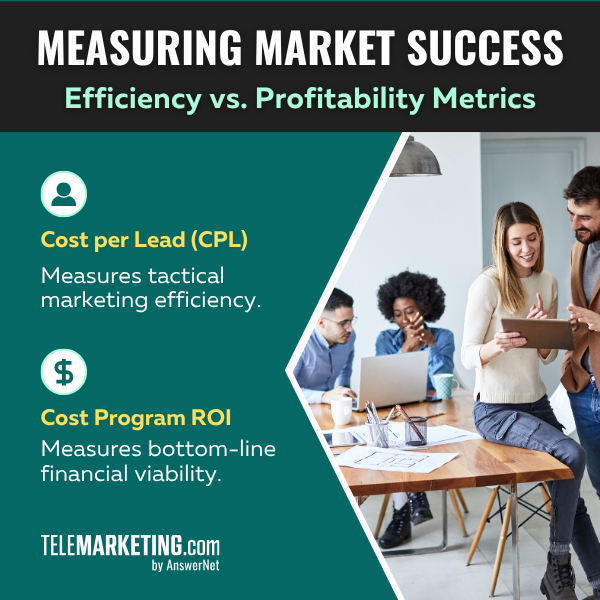
CPL & Net ROI Calculations
A complete analysis of b2b lead generation cost requires evaluating internal overhead against external delivery models. An in-house BDR cost comparison shows that internal business development representatives require $85,000–$130,000 annually in fully loaded costs (including base compensation, taxes, management overhead, and dialing infrastructure) prior to producing consistent qualified pipeline.
Answering decision-maker engagement questions requires incorporating Gartner research on B2B buying behavior, which confirms that enterprise deals involve complex consensus groups demanding multi-channel telephone verification.
Diagnostic framework: identifying pipeline bottlenecks
Pipeline bottlenecks are diagnosed by comparing conversion drop-offs between consecutive campaign stages: low connect rates indicate list decay, while low MQL-to-SQL progression points to weak qualification alignment. Systematically isolating these variables prevents premature campaign termination.
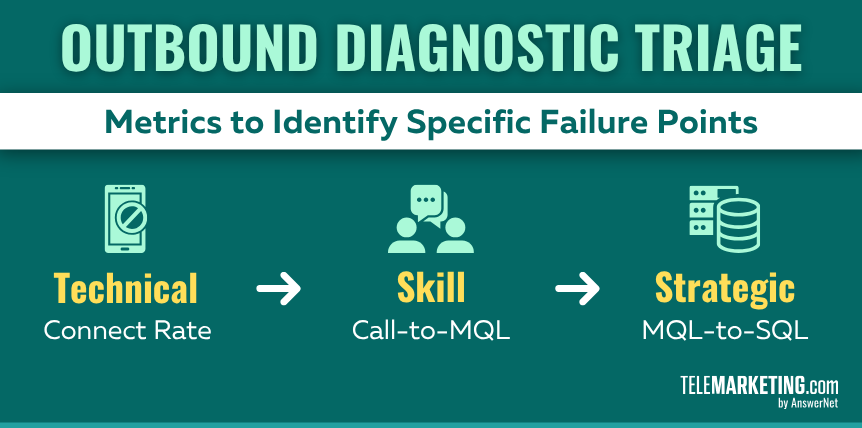
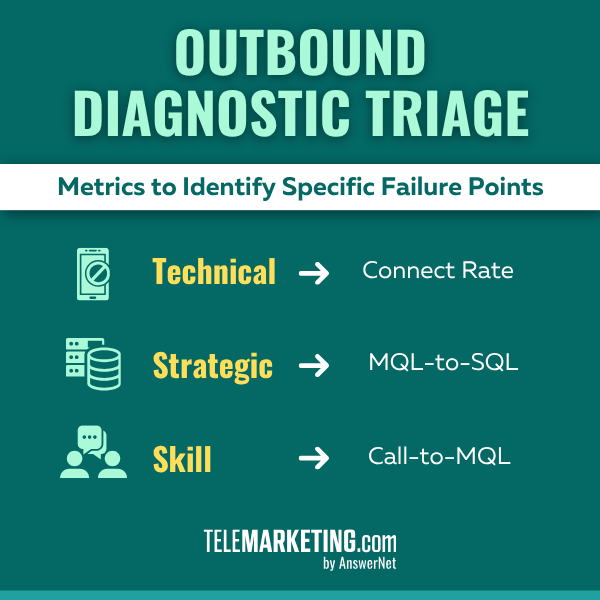
When conversion rates drop below baseline expectations, apply targeted adjustments to isolate root causes:
- Connect Rate Failure (<4%): Audit data sources for phone number decay, implement daily local-presence phone scrubbing, and check outbound phone numbers for spam flags.
- Call-to-MQL Drop (<5%): Refine value proposition scripts, re-evaluate gatekeeper navigation methods, and audit agent objection-handling logs.
- MQL-to-SQL Rejection (>65% drop): Align marketing and sales definitions of an MQL, implement rigorous qualification triage standards, and conduct joint calibration sessions between dialing teams and account executives.
Frequently asked questions
What is a good connect rate for outbound B2B telemarketing?
A healthy outbound B2B connect rate typically sits between 4% and 8% for cold outreach using clean, scrubbed data. Specialized campaigns targeting verified direct-dial databases can achieve connect rates up to 12%, whereas switchboard-heavy lists may hover around 3% to 5%.
How do you calculate Cost per Lead (CPL) for B2B telemarketing campaigns?
Cost per Lead (CPL) is calculated by dividing the total operational cost of the calling campaign (including labor, data, dialer infrastructure, and management overhead) by the total number of qualified Marketing Qualified Leads (MQLs) produced within that billing period.
What is the difference between an MQL and an SQL in outbound lead generation?
An MQL (Marketing Qualified Lead) is a contact who meets basic firmographic ICP criteria and has confirmed verbal interest during a discovery call. An SQL (Sales Qualified Lead) has completed a structured qualification framework (such as BANT or CHAMP) and explicitly accepted a scheduled meeting with an account executive.
What is Lead Depletion Percentage and why does it matter?
Lead Depletion Percentage measures the proportion of a prospect database that has reached a definitive final disposition (e.g., qualified, disqualified, bad number, or explicit opt-out) over a specified timeframe. It tracks list exhaustion velocity and ensures calling teams do not repeatedly churn through unproductive records.
Optimize your pipeline output with benchmarked campaign metrics
Evaluating your outbound calling metrics against verified benchmarks provides the data required to optimize pipeline output. Modern sales programs rely on established campaign frameworks to deliver predictable pipeline growth.